Wearables & vitals
Current trial watch is the Xiaomi Watch 2. Other wearables can follow. A watch is optional — the phone app can log on its own.
Supported devices RubyHealth
Contact Team
RubyHealth
Contact Team
Health application · Beta testing · Q4 2026
RubyHealth is a health application. Patients and families capture wearable and phone logs; authorised doctors review that record and communicate confidentially. Our first offering is a PANS/PANDAS monitoring trial. The same platform can support other care pathways later.
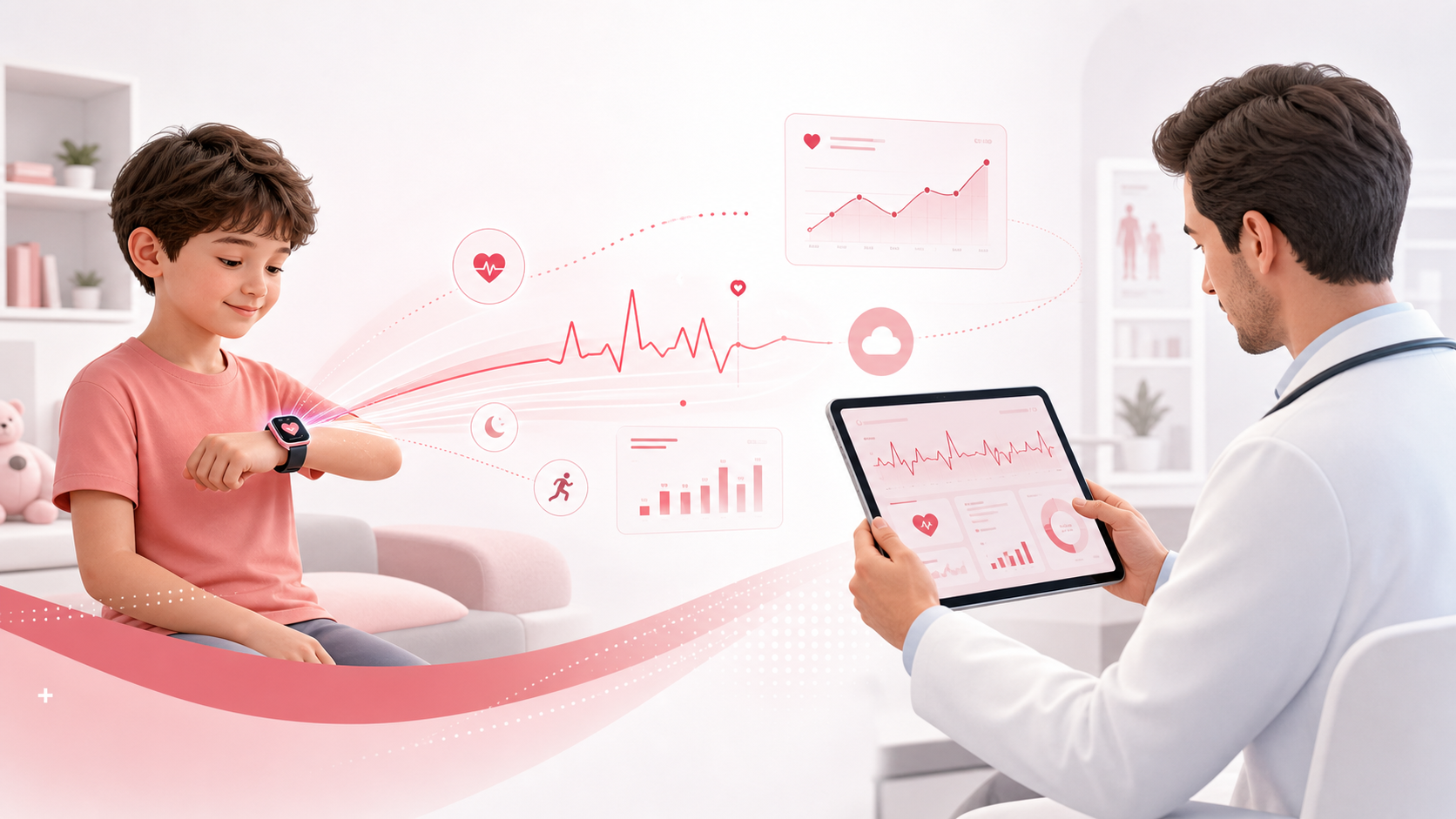
Wearable trends and family notes surfaced for timely review.
What RubyHealth does
Current trial watch is the Xiaomi Watch 2. Other wearables can follow. A watch is optional — the phone app can log on its own.
Supported devices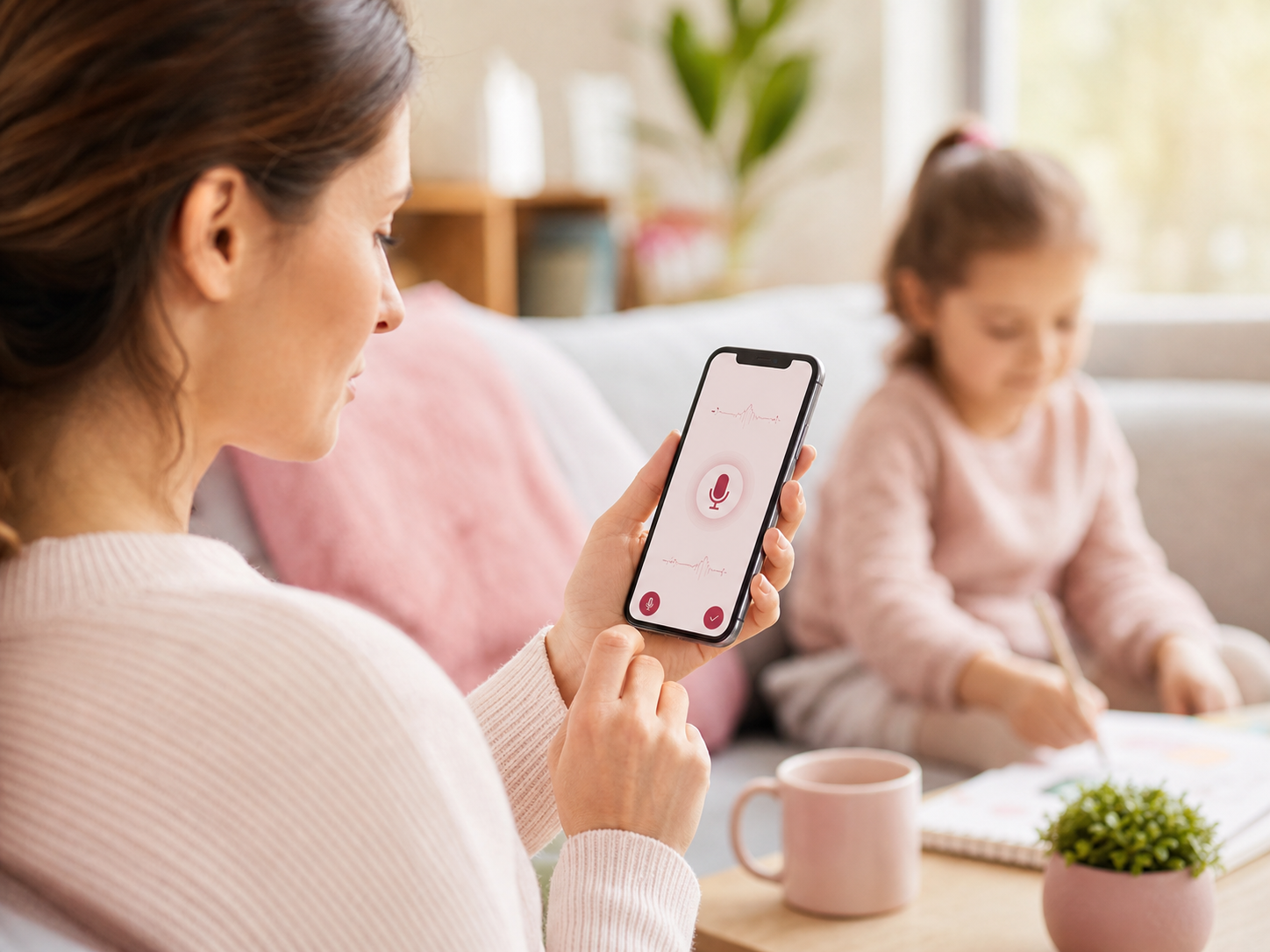
Families type or use voice-to-text for symptoms, behaviour, diet, medication, and daily context — with or without a watch.
View the app
Doctors review assigned patients’ tracking and can message one client or all of theirs. Clients see only their linked doctor or doctors.
View the appProduct gallery
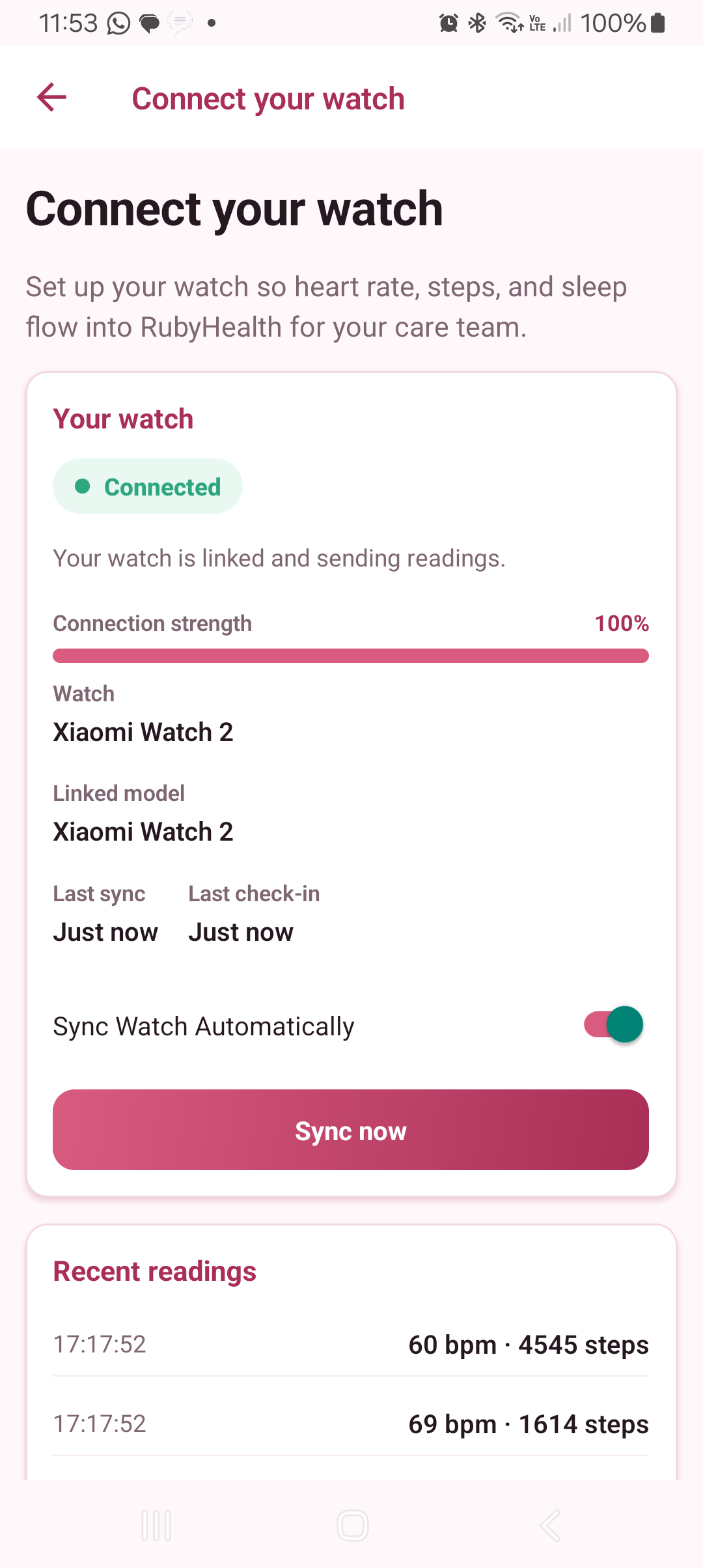
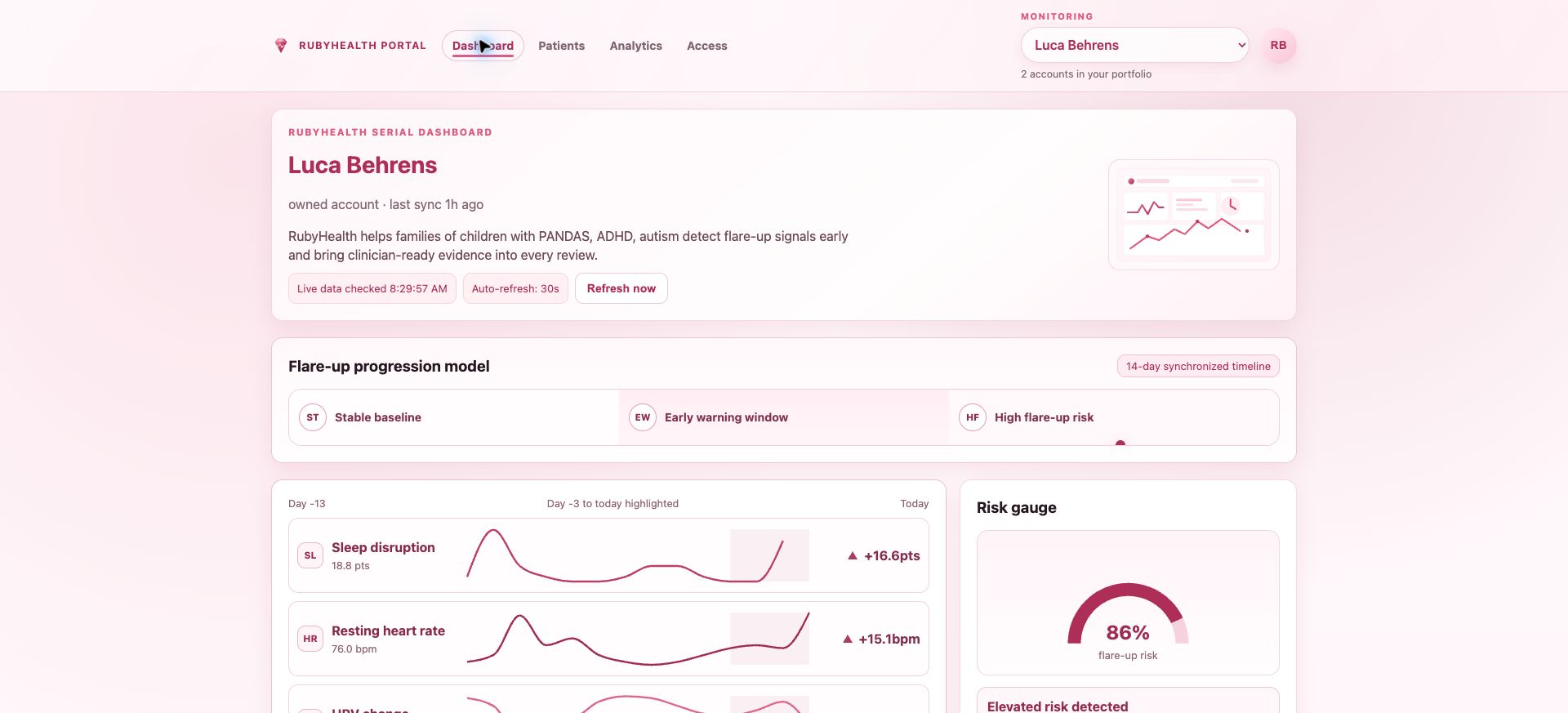
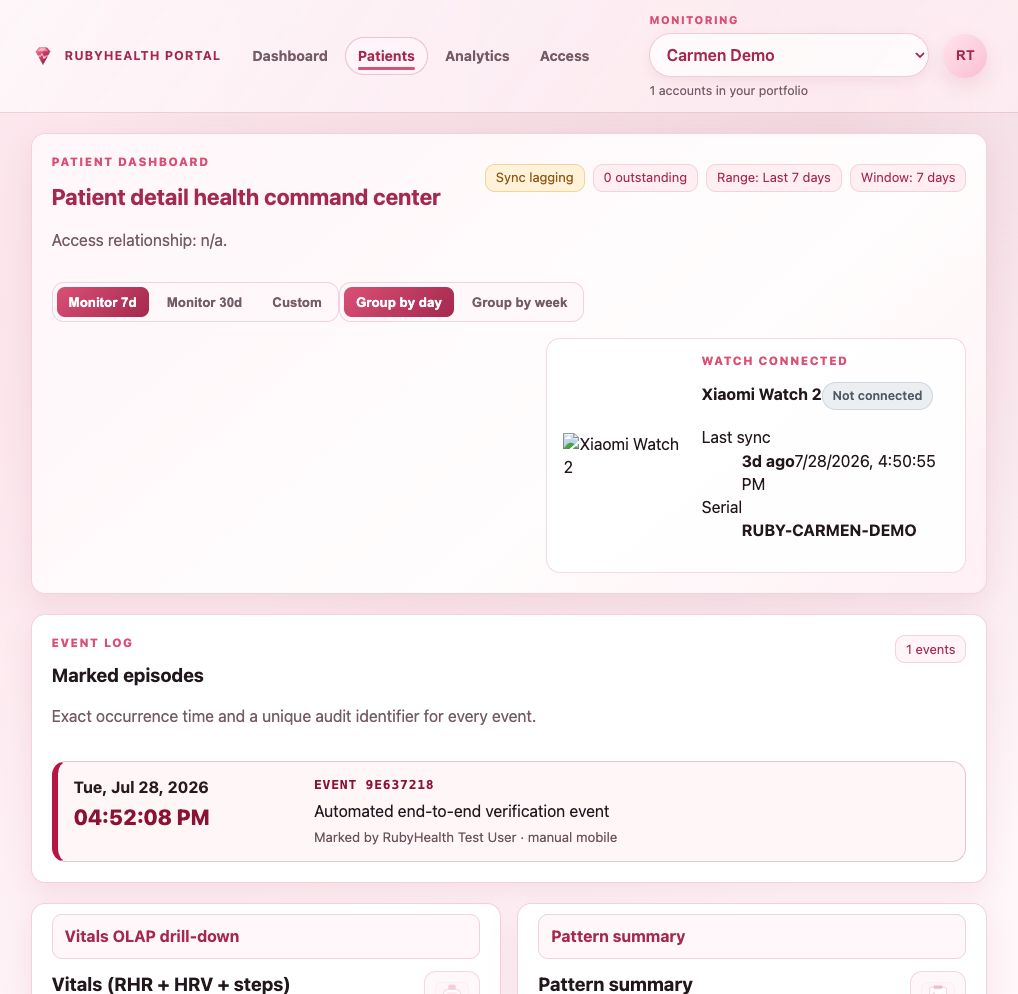
Screens show the working beta. Respiratory motion estimates and alert signals provide context for review and are not diagnostic measurements.
About RubyHealth
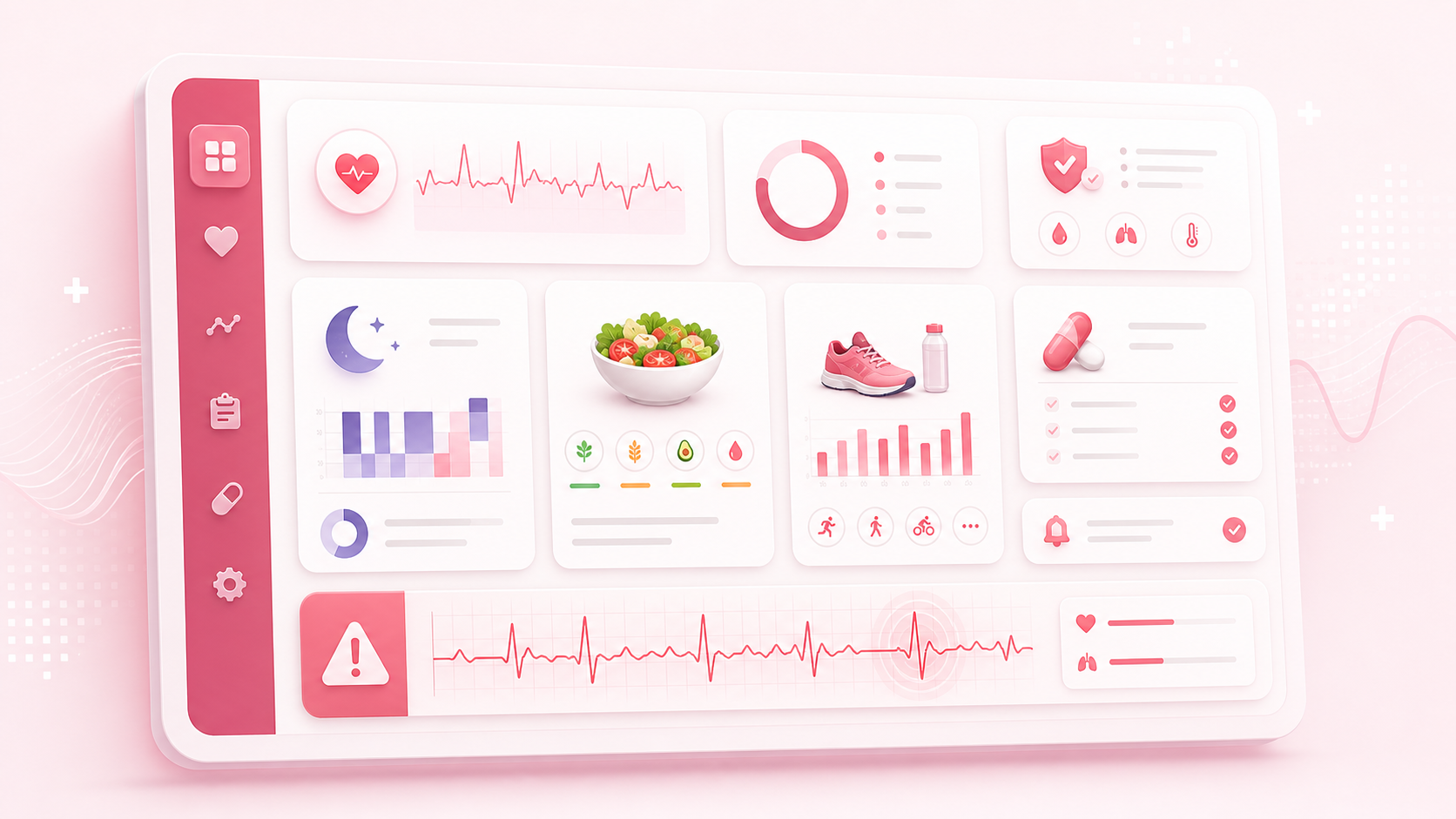
RubyHealth brings vitals, sleep, journal notes, medication, and activity into one timeline so families and authorised doctors can review the full picture together — not screenshots and memory.
Our first product offering is a PANS/PANDAS monitoring trial (50 patients). ADHD, autism, and other longitudinal pathways can use the same application later. RubyHealth does not diagnose or treat.
Read more about RubyHealthLive beta
Care modules
Meet the team
Longitudinal context
RubyHealth aims to track changes across vitals, sleep, journal notes, medication, diet, and activity so families and clinicians can review changes sooner. These patterns are observational and do not predict or diagnose a flare-up.
Discuss Pilot Access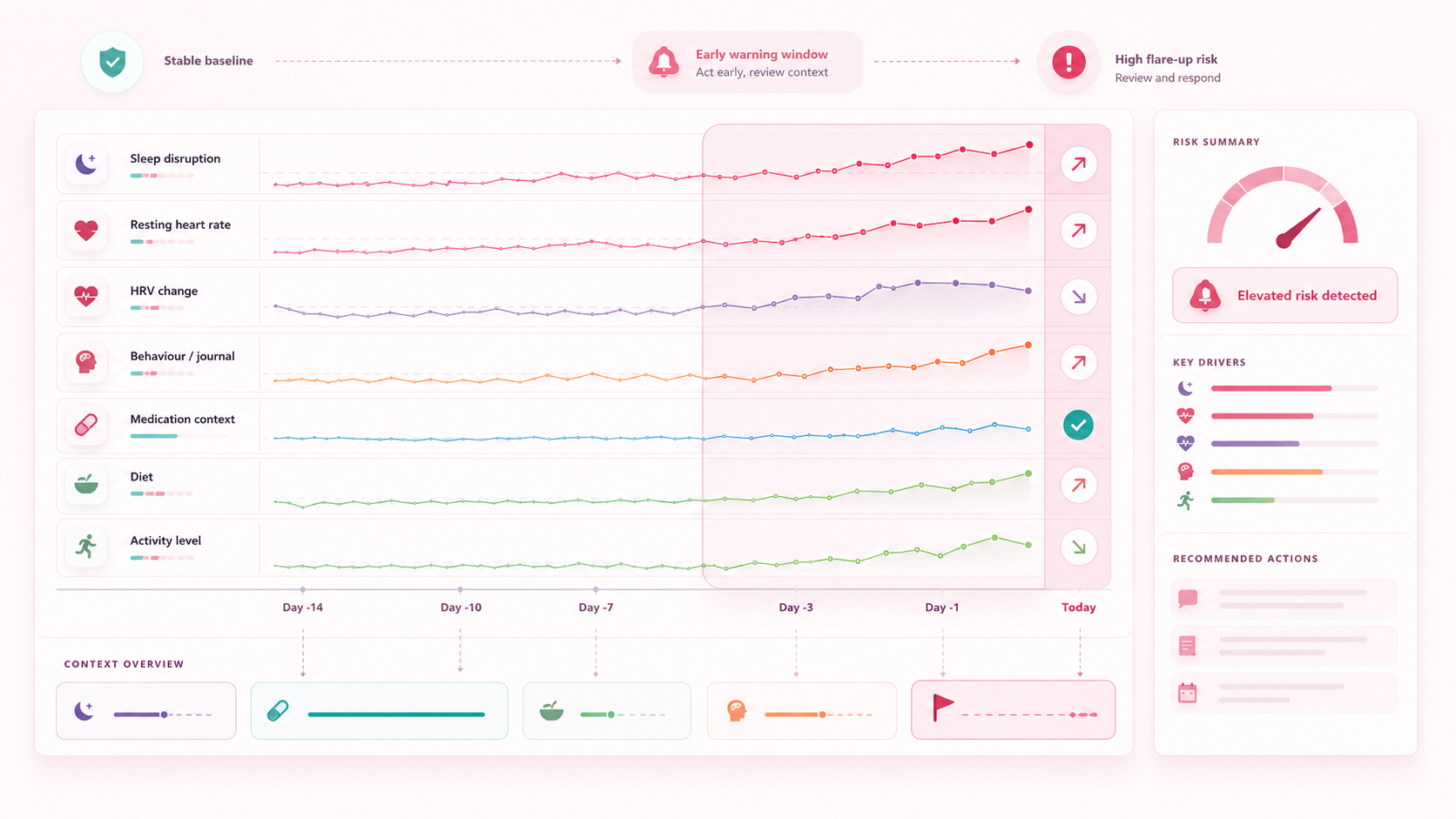
First offering and research

Educational context for the first RubyHealth product — not the whole brand. Abrupt-onset patterns, caregiver notes, and longitudinal review for qualified clinicians.
Read education page
Trial hardware is the Xiaomi Watch 2, with the phone app as the bridge to the cloud. Other wearables can follow; phone-only logging is supported.
How data reaches the doctor
Review key papers on inflammation, HRV, sleep, smartwatch signals, and PANS/PANDAS clinical evaluation.
Open references